Architect CI/CD on Enterprise level
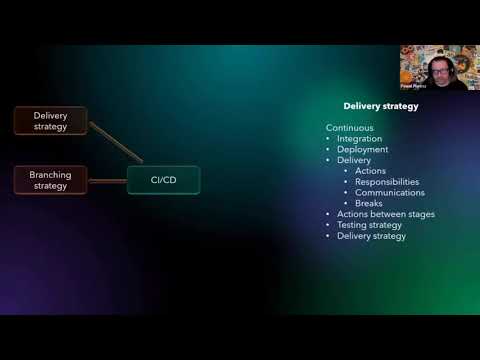
summary
Claims that Jenkins is a tool not CI/CD and that designing CI/CD at enterprise scale requires treating branching, delivery, testing, rollbacks and monitoring as organizational architecture rather than isolated pipelines. Covers concrete choices: trunk/mainline vs GitFlow, monorepo vs many repos, SonarQube-style checkers and security scanners, blue‑green/canary/rolling/recreate deployments, automated vs manual gates, RTO/RPO and rollback forward patterns. Warns that 1000–10,000 pipelines leads to chaos and recommends a shared non‑functional requirements mind map.
AI-written summary · about
chapters (9)
- 0:00Introduction
- 1:14Enterprise CI/CD complexity
- 4:04Branching strategy foundation
- 9:46Delivery and deployment
- 14:26Team capabilities and rollbacks
- 18:18DevOps practices
- 23:17Non-functional requirements
- 25:02Stakeholder alignment
- 26:25Closing remarks
related talks
 34mHelping Enterprises Scale Their Jenkins Software Practices and Tools
 38mCI is Essential but not Sufficient for an Effective Application Delivery Workflow
 33mPlan CI/CD on the Enterprise level!
 37mHelping Enterprises Scale Their Jenkins Software Practices and Tools
 39mRemove your Testing Bottleneck with CI/CD Pipelines
 33mMaking Strides towards Enterprise-Scale DevOps...w/ Jenkins in Your Tool Chain
 44mStairway to Heaven: 10 Best Practices for Enterprise Cont. Delivery w/ Jenkins
 45mBuilding Your Continuous Delivery Toolkit