Concurrency Oriented Programming In A Modern World
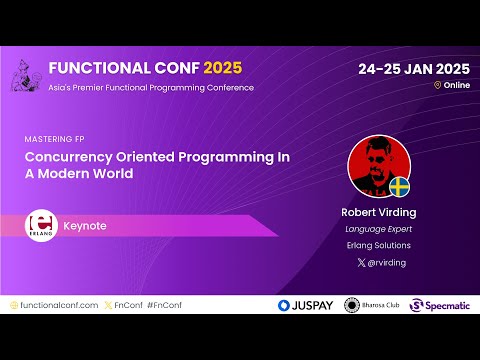
summary
Erlang-like concurrency bakes immutability, lightweight processes and message-passing primitives into the language so systems can run 100,000 lightweight processes without shared-memory hazards; the team prototypes a telecom stack as a 10,000-line prototype and an ATC demo to validate the model. Built-in error containment and live software upgrades enable fault tolerance and rolling updates; WhatsApp’s backend and similar services scale from a few machines to hundreds of thousands because these properties are part of the platform, not an afterthought.
AI-written summary · about
chapters (11)
- 0:00Origins of Erlang
- 2:57Defining the problem
- 6:34Designing the language
- 10:07Concurrency oriented approach
- 13:10OOP and concurrency
- 15:02Concurrency vs parallelism
- 18:31Scaling and distribution
- 21:59Actor model and evolution
- 25:50Modern world application
- 30:50Language design choices
- 33:58Closing thoughts and Q&A
related talks
 52mConcurrency Oriented Programming in a Modern World
 42mConcurrency Oriented Software
 01h 01mThe Erlang Ecosystem
 39mConcurrent Languages are Functional
 51mThe Erlang VM or How I Started Loving Parallel Progamming
 50mA Peek Inside Erlang's OTP
 48m"Handling Millions of Concurrent Users with Erlang OTP"
 53mIdioms for Building Distributed Fault-tolerant Applications with Elixir