Server Driven UI (BFF)

summary
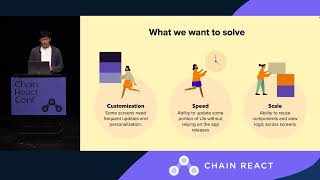
Server-driven UI claims let teams ship UI changes without app-store releases, enable rapid A/B experimentation via feature flags, and rollback instantly; architecture uses a five-step model that builds a JSON view on the backend, sends it to a JSON renderer in the app, and handles interactions through an action registry with mixed client/server execution. Industry examples include Flipkart, PhonePe, Tata Neu and Paytm, common tools are Stack/RFW, headless CMSes like Sanity or Contentful, and context-free state like MobX/GetX/Riverpod, with a 5% caveat for complex animations.
AI-written summary · about
chapters (16)
- 0:00Server Driven UI in BFF
- 2:26Server Driven vs Client Driven UI
- 5:17How SDUI works internally
- 7:01Handling dynamic actions
- 9:52Form handling & chained actions
- 10:57Versioning & backward compatibility
- 11:38Caching & offline strategies
- 12:41Hybrid architecture for performance
- 14:03Atomic vs semantic model
- 17:13Semantic model benefits
- 20:42Decoupled vs shortcut model
- 21:24Core SDUI components
- 23:12Building templating engine
- 24:47Context freedom in UI
- 26:10SDUI open source tools
- 28:17Q&A
related talks
 34mServer Driven UIs: the future of cross-platform rendering
 14mServer-Driven UI in Flutter
 18mServer Driven UI on Mobile
 16mBuilding Server Driven UI
 18mServer-Driven UI: Building Dynamic React Applications
 33mA page out of Server driven UI on Android
 09mServer-Driven UI
 32mLife is too short to develop only for Android – A journey to Server-driven UI