Why Regulation Will Decentralize Data

summary
Claims that EU law (the Data Governance Act and the Digital Markets Act) gives legal standing to data unions and forces real-time API portability so third parties can pull live streams from gatekeepers. Implementation already uses Streamr, Ocean, Chainlink and projects like Swash, GeoDB (≈200,000 users) and Tap My Data (Balancer token sale); back-end infrastructure for revenue-sharing data co-ops exists but remains complex. If the drafts pass, web2 siloed datasets become accessible assets and the bridge into web3 materially closes.
AI-written summary · about
chapters (14)
- 0:00Intro
- 1:32Data in Web3
- 2:49Assets
- 3:46Data
- 4:19Native Data
- 5:11Money Contracts
- 5:56Share Earn
- 6:52Backend Infrastructure
- 7:29Data Silos
- 9:28What do they do
- 10:18Digital Governance Act
- 12:00Digital Markets Act
- 13:38Draft Legislation
- 14:18Decentralizing Data
related talks
 37mAdvancing the Data Economy – Developments & Changes in the Political & Regulatory Framework
 22mAPIs: The Hidden Power Brokers in the EU Data Act Enforcement.
 34mWhat to Expect From Data Governance Act and Data Act for the Data Economy and more?
 01h 12mEmerging Patterns in EU Digital Regulation
 28mDecentralization & Web 3: What's Next for Users & Their Data
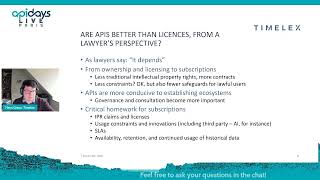 22mThe Current European legal framework on data sharing : How APIs fit in?
 47mLegal Approach to the European Data Strategy
 33mDigital Sovereignty by Design