Decentralized Identity and DeFi
summary
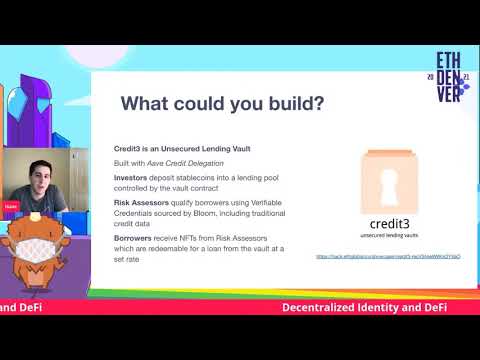
Explains how decentralized identity systems link into DeFi by using TransUnion on-device credit pull and verifiable credentials stored in identity wallets and encrypted data vaults, leaving only IPFS hashes or Sidetree identifiers on chain. Describes a hackathon proof-of-concept that minted NFTs redeemable for loans and used Aave credit delegation plus a Chainlink-style oracle to map credential buckets to addresses; investors deposit stablecoin pools, off-chain risk assessors issue loans, borrowers redeem NFTs, and the prototype works end-to-end with selective-disclosure privacy controls.
AI-written summary · about
chapters (16)
- 0:00Intro
- 0:21What are you most interested in
- 0:48Identity vs DeFi
- 1:33verifiable credentials
- 2:19Decentralized identity
- 3:11DeFi
- 3:50Identity
- 5:40DeFi and Identity
- 7:30Data Flow
- 10:00Building Bridges
- 11:41Credit 3 Example
- 12:55Transunion App
- 13:35Privacy
- 15:22Funding
- 16:52Links
- 17:16Identity for or against you
related talks
 16mCeDeFi - An Emerging Opportunity
 40mBlockchain, Fineract and the decentralized finance
 37mDeFi and Its Potential to Disrupt Traditional Finance & Ensure Financial Inclusion
 25mTectonic Shifts: How Institutions Are Coming to DeFi
 26mThe New Architecture of Credit
 13mNavigating the Paradox of DeFi and Credit
 17mIntegrating TradFi with Web 3.0: Securing the Future of Financial Infrastructure
 21mFireside Chat with Stani on Future of DeFi