What Elixir is about
summary
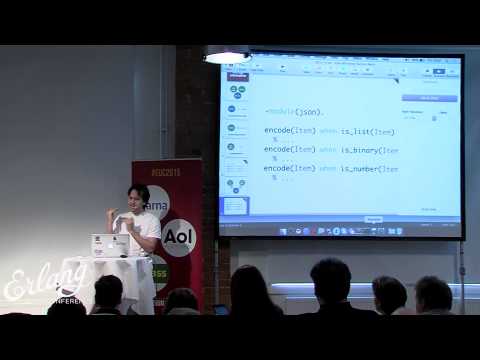
Elixir stakes three concrete goals — extensibility, productivity, compatibility — and delivers them with specific features: protocols add data‑type polymorphism so JSON and inspect dispatch extend to user types; streams provide lazy collections and enable pipeline parallelism via Stream.async; Task.Supervisor, agents and Task/async-await simplify computation and state processes; Mix covers build/test/doc/publish. Calls to Erlang incur no bridging cost. The primitives are implemented and in production use, improving composition and developer workflow.
AI-written summary · about
chapters (42)
- 0:00Introduction
- 0:40Not about the syntax
- 0:57What is Elixir about
- 3:19Records
- 4:57Java 8 code
- 5:09Collections
- 7:15Streams
- 7:52Goals
- 8:21Polymorphism
- 9:28Modules
- 10:10Data types
- 10:36Serialization
- 11:16JSON
- 12:09Picking a fork
- 13:00Nested clauses
- 16:05Code example
- 16:28Datatype
- 18:03Protocols
- 18:26Data type
- 19:00hash quarries
- 20:00inspect
- 20:47inspect protocol
- 21:34productivity
- 22:05after install
- 22:23compatibility
- 23:45extending compatibility
- 24:52Elixir server
- 26:16Tasks
- 26:44AsyncAwait
- 27:19Task await
- 27:33Task supervisor
- 28:28Agents
- 29:47Statebased agents
- 31:14Three bullets
- 31:28Collections and laziness
- 32:13Filtering
- 33:29Pipeline parallelism
- 36:11Broadcast
- 37:53Vertical Machine
- 39:35Challenges
- 40:38Elixir website
- 41:53JSON protocol


