Micro-Frontends with Module Federation: Beyond the Basics
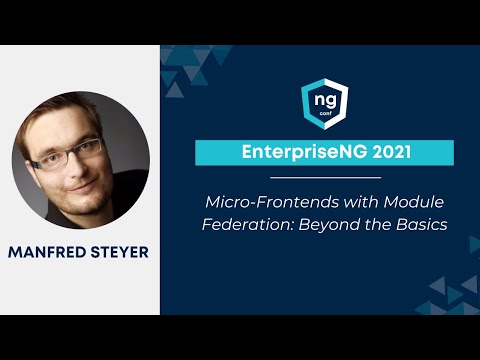
summary
Module Federation actually loads separately compiled front ends at runtime via dynamic import and a small webpack plugin that extends the Angular CLI; demo runs a shell on localhost:5000 and an MFE on 3000. Version resolution chooses the highest compatible version by default, supports singleton or strictVersion modes and can even bootstrap two Angular versions side by side with workarounds. Dynamic Federation uses the webpack runtime API to register unknown remotes at runtime, and monorepo vs multi-repo tradeoffs are compared with concrete build and deployment consequences.
AI-written summary · about
chapters (11)
- 0:00Intro
- 0:36Overview
- 6:57Example
- 14:40Demo
- 17:07Mono vs MultiRepo
- 19:38Avoiding coupling
- 20:52Loading whole applications
- 22:07Advantages and challenges
- 22:40System with multiple versions
- 23:16Azure Cloud example
- 25:24Conclusion
related talks
 30mFederated Angular: Micro Frontends with Module Federation
 21mAngular based Micro frontends with module federation
 30mFederated Angular: Micro Frontends with Module Federation
 38mThe Microfrontend Revolution: Using Webpack 5 Module Federation with Angular
 41mThe Microfrontend Revolution
 33mThe Microfrontend Revolution - Using Webpack 5 Module Federation with Angular
 29mThe Micro Frontend Revolution: Webpack 5 Module Federation and Angular
 31mMFEs , Micro-Frontends with Module Federation and Angular