Try, Raise, Exception
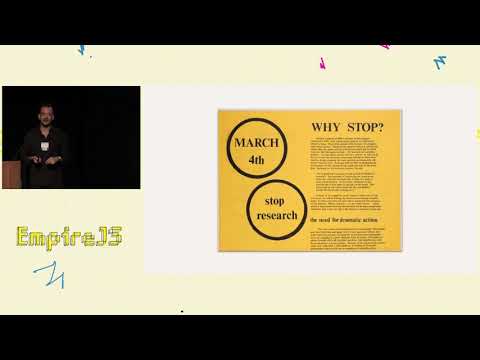
summary
Covers concrete history and tactics: formation of Computer Professionals for Peace, grassroots organizing, newsletters and training programs, and wins and losses in workplace campaigns. Documents corporate–state entanglement, the 1968 interrupt newsletter circulation strategy, campus shutdowns, and later tech-worker actions like the open letter to Jeff Bezos over facial recognition. Gives numbers and outcomes: unemployment rises, the 150 proposed products from the Lucas Aerospace plan, union complaints and an NLRB ruling — and shows which campaigns actually changed policy.
AI-written summary · about
chapters (11)
- 0:00Start
- 3:03This era of mass consumerism was founded on top of a "military-industrial complex."
- 8:43Computer People for Peace was dedicated to building a movement of technology workers.
- 12:43Unions are collective organizations of non-managerial employees that negotiate working conditions.
- 13:40Robert Noyce, the founder of Intel, told Tom Wolfe that unions were "a death threat... to the semiconductor industry generally."
- 14:15Noyce also said that the best way to keep a union out is to pretend like one already exists.
- 14:31But hostility to organized labor has also been a factor.
- 15:25Unions have made important progress in organizing technology's "invisible workforce."
- 16:27Amazon marketed facial-recognition software to law enforcement and government agencies like Immigration Customs & Enforcement.
- 18:44Tech Workers' Coalition
- 18:59Interrupt archives
related talks
 24mThe You in Union: Real Talk About Collective Action
 33mFighting for a better world as a Django developer
 37mDo the Most Good
 26mAutomator activate: unleashing your inner superhero
 40mYour Cyber Journey – You Ain’t Seen Nothin’ Yet
 28mChanging the World
 20mHow The Tech Industry Made Me A Social Justice Writer
 46mKeynote: Decades in the Machine - Meaning and Purpose in Technology