Build Your Own Elixir
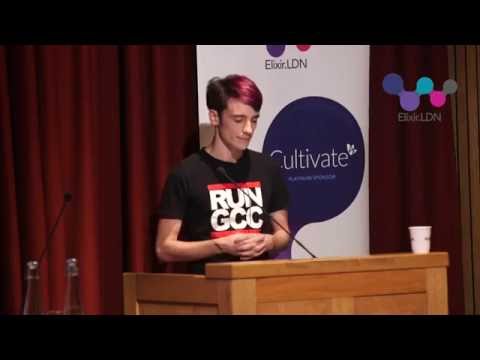
summary
A working pipeline appears: source is tokenized with leex rules, parsed with yecc grammars into an AST, tiny linters and a Slim‑like templating compiler generate quoted Elixir code via macros, and a toy language named gleam compiles its AST into Core Erlang and loads with erl_compile/code:load_binary so it runs on the BEAM — one developer ends up with a 15th language on the platform and a working "Hello World" rather than just slides about syntax.
AI-written summary · about
chapters (39)
- 0:00Introduction
- 1:05Lintas
- 1:58Tokens
- 2:18Alexa Code
- 2:48Tokenization
- 4:18Form
- 4:30Tree
- 10:21Names
- 10:45Token
- 10:59Elects Module
- 11:54String Patterns
- 12:25Rules
- 13:32String function
- 15:38Terminals
- 15:50Grammar Rules
- 16:37Class
- 17:01Name
- 17:35Element
- 18:42String
- 18:56List
- 19:31Civil
- 20:14Syntax
- 20:30Elements
- 21:39Parser
- 21:59Compile
- 23:01Parse
- 23:58HTML templating
- 25:02The problem
- 25:31The definitions
- 25:50The tokens
- 26:31Whitespace
- 27:02Stack
- 27:26Module declarations
- 28:24Record
- 28:42AST
- 34:34CR
- 37:44Elixir Ecosystem
- 38:12More Elixir Projects
- 38:52Implementing Languages
related talks
 37mThe Elixir parser under the microscope
 38mDemystifying compilers by writing your own
 38mA Code Centric Journey Into the Gleam Language
 37mMetaprogramming + DSL Design in Elixir
 21mPapers We Love - Elixir Edition
 30mExploring Elixir Project Re compilation
 35mThe pillars of Metaprogramming in Elixir
 21mCrossing boundaries with Gleam - from functions to runtime