Type UWSGI; Press Enter; What Happens?

summary
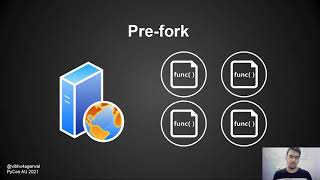
Explains exactly what uWSGI does: it forks and execs workers and passes the listening file descriptor so multiple Python processes accept connections via kernel syscalls (socket bind listen accept). Demonstrates live behavior — spawning N workers to avoid head-of-line blocking and that a Python worker uses about 200 MB per Python worker in tests. Shows zero-drop code reloads because uWSGI holds the listening socket across reloads and lists built-in features like static serving, queuing, Harakiri and config-driven deployments.
AI-written summary · about
chapters (6)
- 0:00Introduction to uWSGI
- 2:57Process management
- 7:17Networking and sockets
- 13:45Reasons to use uWSGI
- 19:30Advanced uWSGI features
- 21:13Q&A and concluding thoughts
related talks
 31mHey, Python-Web-Community! What's going on?
 18mFrom WSGI to ASGI - Django 3.0
 42mFree Threaded Django with Micah Lyle
 26mUsing Django as a Micro-Framework: Hacking on the HTTP handlers..
 32mSync vs. Async in Python: Tools, Benchmarks, and ASGI/WSGI Explained
 31mInside ASGI The Engine Behind Modern Python Web Frameworks
 31mCreating a WSGI Microframework with PEP 3333
 53mDjango productivity tips and tricks