Dynamic Non-Events
summary
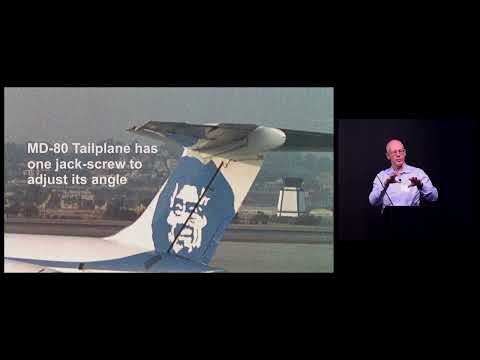
Argues that safety is a dynamic non-event and proves it with concrete failures and margins: an MD‑80 jack‑screw wore to its tolerance after lubrication intervals drifted from weeks to thousands of hours despite 95 million flight hours with no prior failure; airlines instrument and report every near miss; practices like chaos engineering game days and failure injections reveal remaining buffers; a forgotten domain renewal is given as a real outage vector (domain expiry outage).
AI-written summary · about
chapters (9)
- 0:00Start
- 2:20Work in complex systems is bounded by three types of constraints. Economic, workload and safety.
- 10:35Two pilots, three cabin crew 83 passengers died
- 10:492,300 similar aircraft delivered 95 million flight hours
- 14:10Maintenance inspection check
- 14:271985 air industry deregulation 1985 inspection every 5000 flight hrs
- 15:33With a reporting and learning culture, humans use intuition and judgement, see things, fix things, perhaps report things that might be wrong
- 18:13To make systems safe, we need to instrument and study the non-events
- 18:35Look for near-misses and outliers
related talks
 48mDynamic Non-Events
 16mEngineering Failure-Resilient Systems
 40mNavigating the Unknowable: Resilience through Security Chaos Engineering
 19mFireside Chat with Jason Yee
 27mEngineering Without a Safety Net: Where It Works and Where It Hurts
 48mChaos Engineering: The Path to Reliability
 43mResilience Engineering Mythbusting
 31mPlanning for Failure using Chaos Engineering