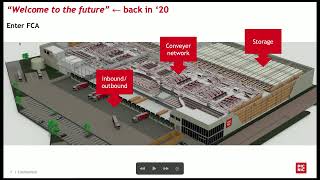
Cloud native warehouse automation

summary
Picnic moves automated fulfillment control from on‑prem back to cloud, citing regained developer velocity, lower TCO and fewer incidents after a staged migration. Conveyor scanners require a 250 ms decision window so a private link and local caching mitigate latency; teams simulate 50 ms synthetic latency in production and see median RTT shift but no spike in mis‑diverts. Migration splits into four windows to move 8 databases, 12 apps, 1 broker with runbooks and a firefighting expert who patches handheld scanners live to avoid rollback.
AI-written summary · about
chapters (13)
- 0:00Cloud native to hybrid
- 1:09Picnic and business
- 4:00On-premise automation start
- 6:51Latency challenge in automation
- 7:12Problems after on-premise move
- 8:37Connectivity and complexity
- 9:20Testing latency in production
- 11:51Safe cloud migration
- 13:13Migration in windows
- 14:57Expert migration team
- 15:18Barcode scanner rollback
- 19:32Key learnings from journey
- 20:36Cloud native results