My Favourite Errors

summary
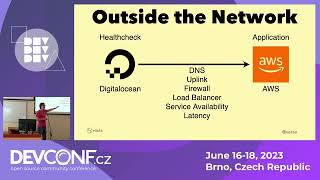
Starts with concrete diagnostics: use ping FQDN to catch expired domains, run traceroute loop between .56 and .51 to find TTL-exceeded routing loops, and inspect proxy/kernel logs for connection reset by peer versus connection refused. Recommends increasing timeouts up the stack (app 30s, nginx 31s, proxy 32s), adding domain-expiry monitoring, and watching for nginx-specific 499/4.99 artifacts. Shares a root cause: upstream DDoS appliance misconfigured to “active” holds connections indefinitely, producing silent failures.
AI-written summary · about
chapters (11)
- 0:00Start
- 1:00Standard Stack
- 1:29First action: Does it ping?
- 2:31No route to host
- 5:47Connection refused
- 6:47Connection timed out (TCP)
- 15:51HTTP 504
- 18:43Honourable Mentions
- 22:40Try telnet
- 24:28DDoS Protection
- 26:25Lessons and follow-up
related talks
 22mWhy is it always DNS, TLS, and bad configs?
 31mWhy is it always DNS, TLS, and bad configs?
 31mDebugging the Routing Tier
 13mHoney, I Broke the Things: Debugging Gray Failures...
 39mHow to Use Common Investigation Practices in Troubleshooting
 50mDebugging HTTP
 39mObservability to Resolution: The Journey Through a Production K8s Incident
 36mFailing With Grace