Compiling Is Not Enough: Write Code for People, Not Machines

summary
Practical guidance on writing code for humans, not just machines: concrete tips to make code more readable and easier to change, plus techniques for spotting areas that need improvement. Covers the relationship between clean-code practices and agile methods and how those practices help keep code understandable and maintainable.
AI-written summary · about
chapters (23)
- 0:00Introduction
- 1:05Broken window theory in code
- 3:12What is good code
- 6:07Clean code tips
- 8:16Meaningful names and comments
- 10:24Formatting and consistency
- 11:50Small functions and focus
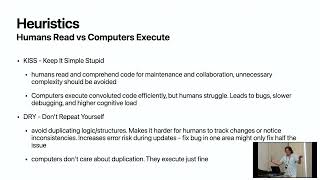
- 13:16Avoid duplication and premature abstraction
- 14:40Data structures vs objects
- 16:31Automated tests as guarantee
- 17:59Clean code is team responsibility
- 19:04XP values and essential practices
- 20:10Code reflecting business
- 21:55Encapsulating business rules
- 22:37Pair programming
- 23:41Stand-ups and communication
- 25:08Automated tests vs TDD
- 26:31TDD cycle and side effects
- 27:56Automated tests as standard
- 28:16Simple design and cost reduction
- 29:44Collective and standardized code
- 30:48Sustainable pace and quality
- 32:54Three final lessons