Empower Inclusion Through Accessible Java Applications

summary
Java’s desktop and server stacks offer concrete accessibility tools and patterns: Java Access Bridge and the JavaFX Accessibility API expose roles, states and accessible text for screen readers; use focus traversal, key bindings and contrast checks to meet WCAG AA/AAA ratios (EU Accessibility Act effective 28 Jun 2025 requires AA). Back ends influence accessibility via semantic REST/GraphQL endpoints, labeled timestamps and inclusive docs; prefer server-side rendering for stable DOM. Test with Axe, Playwright, JAWS/Narrator, and augment with NLP, speech-to-text and AI image captioning while validating with real users.
AI-written summary · about
chapters (9)
- 0:00Introduction to accessibility
- 4:21Java’s role in accessibility
- 16:52Java APIs for assistive tech
- 27:24JavaFX accessibility features
- 33:01Server-side rendering impact
- 34:26Inclusive API design
- 38:44Testing accessibility in apps
- 40:29AI for accessibility enhancement
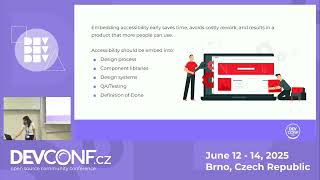
- 43:40Accessibility as team responsibility
related talks
 33mAccessibility needs to be the future of better technology
 15mAccess-what? why and how. A11Y for all
 12mAccessibility-First Development: Making Applications Inclusive from Day One
 53mAccessing Accessible Accessibility
 30mAccessible.JS
 36mThe Human Side of Accessibility
 29mInclusive and Accessible App Development
 01h 01mFull Stack Accessibility, and the Business Case for being Inclusive