INTERPRETABLE AND DIFFERENTIALLY PRIVATE MACHINE LEARNING

summary
Claims that EBMs (Explainable Boosting Machines) reach boosted-tree/NAM accuracy on tabular data (average ROC ~0.866 vs ~0.86) while remaining fully interpretable and editable. Demonstrates pneumonia case: a 46‑feature GAM uncovers surprising proxies (asthma and heart disease showing lower observed mortality), round‑number treatment thresholds (risk jumps at 85, dip at 100), and a conservative policy change estimate (≈2,500 US lives saved for one dialysis threshold). Presents DP-EBMs that retain high ROC at ε≈0.5–1, and a built GAMChanger editor to modify graphs post‑training without breaking privacy, with edits documented and usable in clinician evaluations.
AI-written summary · about
chapters (13)
- 0:00Start
- 3:48Deep Neural Nets
- 5:21Black Box versus Glass Box Machine Learning
- 17:56Fit a Generalized Additive Model with a Neural Net
- 19:58Additive Models
- 21:13Pneumonia
- 23:37Age Graph
- 35:11Differential Privacy
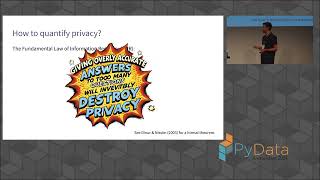
- 35:30What Differential Privacy Is
- 39:59Editing the Model
- 45:41Editing Models
- 54:23Is There an Attempt To Use Ebm for Unstructured Data like Images Maybe Not on Individual Pixels
- 58:18How Can You Handle Interactions
related talks
 26mStop Explaining Black Box Models, Use Interpretable Models Instead
 41mGeneralized Additive Models: Explainability Strikes Back
 15mInterpretable Machine Learning with R
 28mManaging AI Risk: Beyond Explainability
 31mIndividual Gaps in Prediction Generalization
 41mBetter Than Deep Learning: Gradient Boosting Machines (GBM)
 43mToward Human-Centered Machine Learning
 47mPrivate targeting strategies