Using adversarial samples to robustify your Neural Network Models

summary
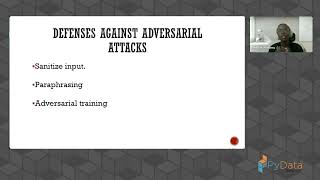
Shows concrete attacks and defenses: tiny gradient perturbations flip a panda to a gibbon, 3D-printed turtle -> rifle works in the physical world, stickers turn a stop sign into a 45 mph sign, YOLO gets fooled by a poster that hides people, lidar point-cloud detectors miss 3D adversarial objects, and medical images flip between benign and melanoma. Describes the fast gradient sign method, epsilon tuning, black‑box attacks via API probing, using adversarial training and testing toolboxes, and explains model focus with LIME/SHAP occlusion sensitivity; generating an example is ~400 ms on a GPU.
AI-written summary · about
chapters (10)
- 0:00Start
- 1:54Remember this?
- 10:21Your adversarial example is ready
- 21:14In Training: augmenting
- 23:12In Testing
- 24:59What does the model see?
- 25:57Interpretability?
- 26:28Adversarially lost
- 27:04Adversarial Generators
- 27:45Tinker
related talks
 21mAdversarial Attacks
 36mAdversarial Attacks on Deep Learning
 25mTricking Neural Networks : Explore Adversarial Attacks
 21mTricking Neural Networks : Explore Adversarial Attacks
 43mTensorflow, there is no spoon
 36mAdversarial Machine Learning: How Secure Is ML?
 02h 13mUnderstanding Security Threats Against Machine/Deep Learning Applications
 38mMLSec Going Deeper