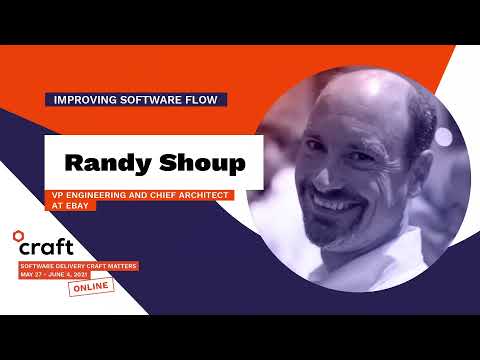
Improving Software Flow
summary
Five Ideals from The Unicorn Project map to concrete practices: organize small autonomous teams so 80% of project work stays inside team boundaries, enforce strict API contracts and security boundaries, protect maker flow with clustered meetings and do-not-disturb policies, and allocate 25–30% of engineering effort to improving daily work via experiments. Measure operational impact as outcomes not uptime—availability expressed as revenue impacted—use blameless postmortems and psychological safety to surface fixes.
AI-written summary · about
chapters (17)
- 0:00Start
- 1:12Five Ideals
- 1:44Many Autonomous Teams
- 2:36Modular Architecture
- 6:35Too Much in Parallel
- 7:24Deliver Incremental Value
- 9:19Flow
- 10:07Maker vs Manager Schedule
- 14:14Vicious Cycle of Technical Debt
- 14:49Virtuous Cycle of Investment
- 17:10Use Common Currency
- 18:29Improvement Budget
- 20:41Technological Maestro
- 23:59Psychological Safety
- 25:43Inclusive Decisionmaking
- 26:56Blameless Postmortems
- 28:35Business Outcomes
related talks
 47mImproving Software Flow
 51mImproving Software Flow
 33mThe Unicorn Project And The Five Ideals
 01h 05mSoftware Teaming (Mob Programming) and the Power of Flow.
 30mLead Times and Psychological Safety within the Five Ideals
 53m26 Heuristics For Effective Software Development
 23mGad Salner- How to scale a unicorn-building engineering team (and stay sane)
 52mEmpowerment in the Software Delivery Lifecycle