Tips on Surveying the C++ Community
summary
Yearly JetBrains Developer Ecosystem survey shares raw data and explains methods: definitions of “professional developer,” filtering by response time and duplicate IP/email, translations to eight languages, targeted ads to reach 17 key countries and a goal of ~300 external respondents per country. Claims include 1,157,000 primary C++ developers and 2,492,000 regular C++ users (2023); sample sizes: ~35,000 total, 2,647 full C++ responses. Notes concrete measurement quirks: CMake vs build-tool wording (Ninja inflates), Conan/vcpkg trends, clang-format counted as guideline enforcement, CI vs local analysis, and “check all that apply” effects.
AI-written summary · about
chapters (29)
- 0:00Intro
- 2:04Why surveying the community
- 4:28How many developers are there
- 7:37How are the numbers calculated
- 9:10How are the numbers spread
- 10:02Whats next
- 11:20C shares
- 12:42C shares timeline
- 13:50C surveys
- 18:12C foundation survey
- 20:27Developer EOS survey
- 21:11Reducing the bias
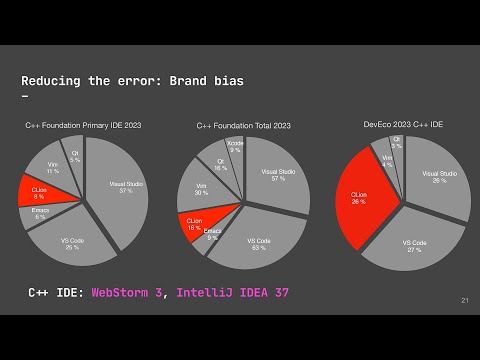
- 27:08Brand buyas
- 30:10Regional bias
- 31:27Language bias
- 33:52Book recommendation
- 35:12Survey story
- 37:20Asking questions is hard
- 38:25Upgrade paths
- 39:32Package management
- 41:00Verifying the data
- 42:57Project models
- 44:19Guideline enforcement tools
- 47:44Unit testing framework
- 49:20Summary
- 50:25Validation
- 52:29Comparison
- 54:02Thank you
- 55:20Questions
related talks
 05mC++ Community Surveys
 24mWhat makes developers happy in 2021
 17mThe Next 50 Million Developers (Keynote)
 51mThursday Closing Keynote
 48mThe community power in the developers life
 56mFounding C++ User Groups
 05mLightning Talk: Who is Looking for a C++ Job?
 01h 01mLearning (and teaching) modern C++ - Challenges and Resources