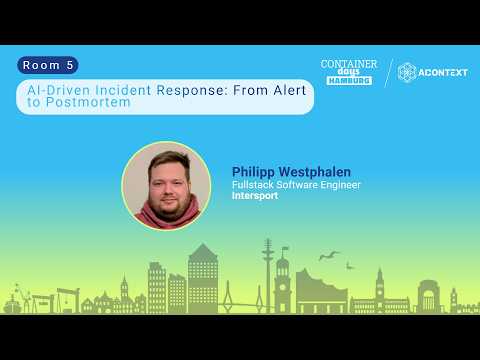
AI-Driven Incident Response: From Alert to Postmortem
summary
A Postgres migration that rewrites a large product table causes a table lock and three outages after the same version is deployed three times; rollback restores search in 15 minutes but the unsafe migration keeps failing weeks later. Architecture uses CI issues, pipelines for diagnosis under read-only identity, and an action catalog behind approval gate with external probes. AI earns value in cross-system diagnosis and assembling a 14-entry minute-precise timeline and draft postmortem, not in autonomous remediation; guardrails are SLOs, Git-declared autonomy, and level one read-only operations.
AI-written summary · about
chapters (9)
- 0:00Introduction
- 2:57Automation failure lesson
- 5:06Defining incident response
- 8:15AI in incident response
- 12:35Autonomy levels explained
- 17:15Preventing future outages
- 21:15AI and postmortems
- 25:14Worst case scenarios
- 26:42Key takeaways
related talks
 30mAI-Assisted Post-Mortem Analysis for PostgreSQL
 19mFrom Alerts to Action: AI-Powered Incident Response Systems
 35mAgentic Incident Response
 12mUsing postmortems to break out of infinite loops
 51mDatabase Incident Management: When Everything Goes Wrong
 40mWhen Incidents Fix Themselves: AI SRE in action
 15mIntelligent Incident Management in DevOps
 30mAI and Incident Management: How to Reduce Manual Work and Speed up the Incident...