Elephant in the Blameless War Room - Accountability

summary
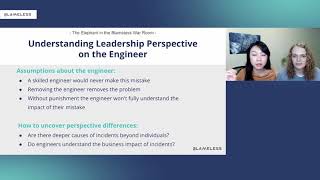
Argues that blameless culture and real accountability coexist by using concrete practices: ask probing questions after incidents, run contributing factor analysis, and implement system fixes (make admin UIs distinct, add oversight and a flashing production/test distinction banner). Promises a timeline for follow-up actions (two weeks) and separates performance management from incident resolution. Presents the claim accountability faces forward with a real example where no one is fired and systemic changes reduce recurrence.
AI-written summary · about
chapters (14)
- 0:00Blameless accountability intro
- 1:16Blameless vs accountability tension
- 3:00Psychological safety value
- 6:53Leadership vs engineering views
- 9:19Leadership assumptions on incidents
- 13:36Leadership concerns on engineers
- 17:47Rebuilding stakeholder trust
- 20:35Immediate incident response
- 22:23Follow-up investigation and systemic changes
- 23:47Reliability planning post-incident
- 25:11When traditional accountability fits
- 26:15Blameless accountability in action
- 27:38Case study example
- 28:19Q&A
related talks
 28mElephant in the Blameless War Room—Accountability
 05mWho's to Blame?
 28mBlameless Postmortem Culture
 05mIGNITE: A blaming culture is not your fault
 07m"Whose fault is that? It’s the wrong question"
 48mOf Elephants, Mooses and other problems in the Room
 18mCultivating Accountability and Resilience
 40mPanel: Psychological Safety vs Accountability