Managing One of the World's Largest Clojure Code Bases
summary
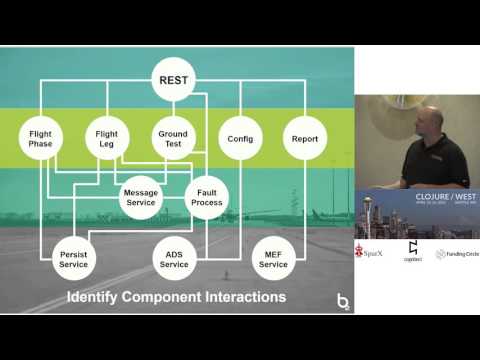
An onboard maintenance function (OMF) that parses a DSL with Instaparse + Trapper Keeper + Lamina runs on the aircraft JVM, evaluates over 6,000 faults against live CAN sensor data, exposes REST endpoints, and stores state in SQLite; the codebase is about 16,000 lines of Clojure. Performance hotspots get fixed with YourKit, transducers and switching a persistent queue to Java ConcurrentLinkedQueue. The system operates on the Boeing 737 MAX factory floor and flies on test flights, is not flight‑critical, and is reported as working.
AI-written summary · about
chapters (15)
- 0:00Introduction to project
- 1:00Boeing 737 challenges
- 2:30Onboard Maintenance Function
- 5:08System architecture
- 6:34Functional requirements
- 9:09System services
- 10:22Why Clojure
- 12:13Development challenges
- 14:42Messaging service design
- 17:26Performance profiling
- 19:44Clojure optimization
- 22:29Library and community
- 25:04Team learning curve
- 26:13Project delivery
- 28:41Q&A
related talks
 20m"Unmanned Systems Flight Planning with Clojure"
 40mGetting 50,000 Companies on Board with Clojure
 35m"Clojure lsp – One tool to lint them all"
 42mWhy Clojure?
 01h 15mEffective Programs - 10 Years of Clojure
 27mCode execution as data with omni-trace
 31mClojure at 4,000 msg/s-What We Learned, Loved, and Loathed
 38m"Growing Data Center networking mgmt UI using ClojureScript, Reagent and re-frame"