The ReactJS Landscape

summary
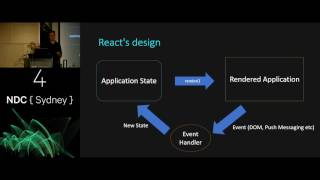
Explains why ReactJS matters for ClojureScript by comparing three real CLJS wrappers — Om, Reagent and Quiescent — and shows a working Quantum Tic Tac Toe implemented in each. Emphasizes React’s virtual DOM plus immutable data for fast, simple rendering. Om uses a single root atom and cursors with transact for localized updates, Reagent exposes reactive atoms that auto-track derefs, and Quiescent is value-first and explicit about rendering (call render manually, ran at 60fps). Notes pitfalls: Om can encourage heavy component state, Reagent can spawn too many atoms, Quiescent needs more app scaffolding.
AI-written summary · about
chapters (22)
- 0:00Start
- 1:12What Is React
- 1:47Why React
- 2:33Virtual Dom and Immediate Mode Style Rendering
- 3:24Immediate Mode Rendering
- 4:37Reconciliation
- 5:32The Virtual Dom
- 6:52General Structure of an Component
- 8:31Lifecycle Hooks
- 11:34Tic-Tac-Toe
- 11:45Quantum Tic-Tac-Toe
- 13:16Disclaimers
- 14:59Ohm
- 18:52Render Roots
- 19:40Click Handler
- 21:44Keep Components Simple
- 22:25Reagent
- 24:01Reactive Atoms
- 28:00Cautions
- 30:20Quiescent
- 33:33Defining a Component
- 39:12State Management
related talks
 54mClojurescript and Om - Pragmatic functional programming in the Javascript Land
 32mRefracting React
 29mDesign decisions in React-based ClojureScript applications
 27mThe Functional Final Frontier
 27mI Heard React Was Good
 34mCreating reactive components using ClojureScript React wrappers
 47mTaking purity to the limit in GUI programming w/ React and Reacl
 01h 04mWhat makes React different?