RHEL, Fedora and CentOS: Solving The Penrose Triangle
summary
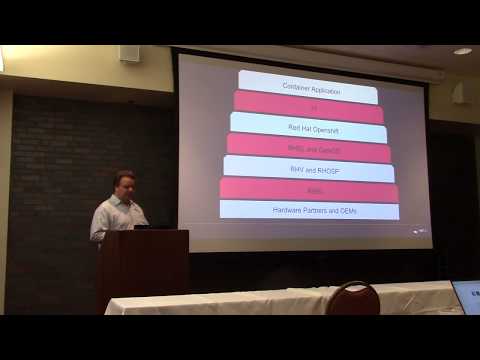
The relationship among Fedora, RHEL and CentOS is not a clean Fedora→RHEL→CentOS pipeline: Fedora holds about 21,750 source components, RHEL pulls roughly 13% of Fedora packages into RHEL7, RHEL kernels come from kernel.org, and CentOS is a painstaking RHEL rebuild that is “good enough” but approximate. Red Hat is working on unifying kernel communities, merging infra, adding CentOS CI to Fedora, and shipping modularity (parallel availability) so OS lifecycles slow while applications move faster.
AI-written summary · about
chapters (10)
- 0:00Start
- 0:38Rel Development Coordinator
- 3:22What Caused Fedora To Happen
- 13:24Fedora Centos in Rel How Does that Actually Relate to Red Hat's Portfolio
- 18:25Revisit Linux Distributions
- 22:17Modularity
- 26:01Split the Operating System from the Applications
- 36:18Why Apple Is in the Fedora Community
- 40:13What Reliability Means
- 41:27Developer Stability
related talks
 28mLinux distributions as an ultimate challenge of continuous integration and how we solve it.
 24mEveryone can contribute to RHEL now!
 13mCoreOS is Dead, Long Live CoreOS
 43mWhat's new with CentOS at Facebook
 35mBuilding the Community Enterprise Operating System through CentOS Stream
 33mCentOS Frankenkernel: Append Your Limb
 46mCentOS Stream: What you need to know
 16mTaming the Linux Distribution Sprawl: A Journey to Standardization and...