Reducing Deployment Risks with Progressive Automated Canary and Spinnaker in a Reg...
summary
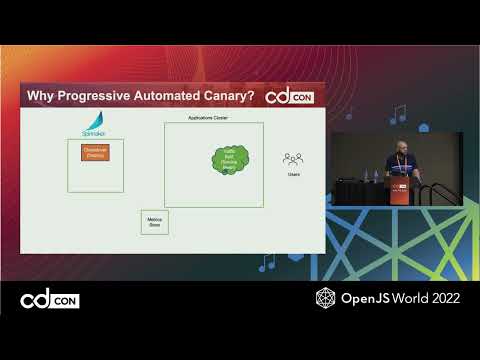
Shows a Spinnaker pipeline that deploys fresh baseline and canary Kubernetes manifests, uses Istio to split 10% traffic to canary and baseline while prod gets 80%, and runs Kayenta against Prometheus queries to compare latency and success rate. Demo forces a 30% success canary vs 100% baseline (about a 69% delta) and triggers automated rollback on 69% failure delta. Also demonstrates pipeline templates to prevent edits, a job stage to create change records, and Fiat regex-based app permissions.
AI-written summary · about
chapters (12)
- 0:00Introduction and setup
- 3:11What is progressive automated canary
- 7:50Why use progressive automated canary
- 10:57Building a Spinnaker pipeline
- 12:21Demo of canary failure
- 16:55Canary analysis configuration
- 19:05Success scenario and manual judgment
- 21:10Regulatory requirements challenges
- 24:22Job stage for compliance
- 27:12Pipeline templates for control
- 30:24Authorization and permissions
- 31:30Key takeaways and conclusion
related talks
 43mUsing Kubernetes, Spinnaker and Istio to Manage a Multi-cloud Environment
 30mVisualizing Canary Rollouts with Istio and Helm
 40mProgressive Delivery with Kubernetes and Argo Rollouts
 36mProgressive Delivery in the Kubernetes era
 48mContinuous Delivery with Spinnaker
 26mCanary Deploys with Kubernetes, Istio and Envoy
 51mProgressive Delivery in the Kubernetes era
 35mLeveling Up Your CD: Unlocking Progressive Delivery on Kubernetes