The Future of Programming

summary
Argues that real change is generational — core ideas like objects (introduced 1967) take 23 years to mainstream — so focus on paradigms not languages. Advocates concrete features: destructuring for extensible, non-duplicating code; continuations to capture conversational state; lazy evaluation plus purity for performance; and clear async markers (criticizes Kotlin’s suspend fun naming). Demonstrates with filter‑map‑find performance tradeoffs and recommends learning multiple paradigms to adapt faster.
AI-written summary · about
chapters (11)
- 0:00Introduction to programming
- 2:01Paradigm shifts in programming
- 10:20Generational change in tech
- 13:08Stateful web applications
- 15:27Desired language features
- 20:45Expressiveness and design
- 23:53Composability in languages
- 27:02Efficiency vs cuteness
- 33:35Functional programming efficiency
- 37:15Asynchronous programming
- 40:18Learning multiple languages
related talks
 32mComputer Programming Is Dead; Long Live AI-First Programming
 01h 33mRadical Object Orientation in the Age of AI Code Generation
 01h 09mThe Future of Software Engineering
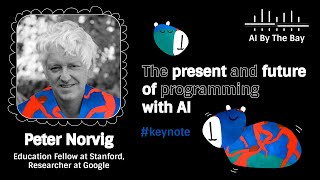 26mThe present and future of programming with AI (Keynote)
 43mWill code remain a relevant user interface for end-user programming with genera...
 33mClean Code Revisited in the Age of AI
 30mToward Programming Languages for Reasoning -- Humans, Symbolic Systems, and AI ...
 41mFuture of Programming: What’s Our Place in the World of Coding Machines?