Androbugs Framework: An Android Application Security Vilnerability Scanner
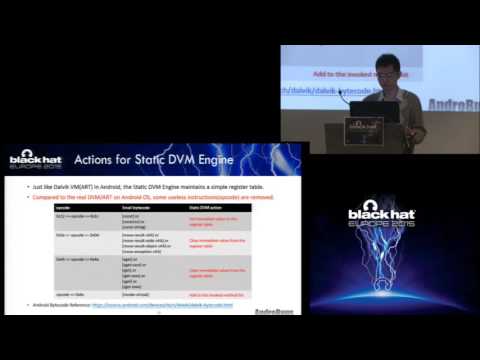
summary
An open‑source Python scanner called AndroBugs Framework statically analyzes smali via Androguard, flags concrete weaknesses (world‑readable files, exported providers, WebView file access, SSO misconfigurations, missing cert‑pinning, debuggable builds) and stores results in MongoDB for massive runs; a 5,000‑app sweep finds issues (example: 5,000 applications scanned, 126 had debug enabled), produces per‑vector reports, helped reproduce a Tesla TLS bypass after repackaging and led to vendor fixes.
AI-written summary · about
chapters (23)
- 0:00Introduction to Android BWF
- 1:26Android security background
- 2:35Need for a new scanner
- 4:26Android BWF features
- 6:07Scanner architecture
- 8:00Analysis engines
- 11:21Static analysis workflow
- 14:14Developing new vectors
- 17:28Vulnerability examples
- 19:40Content provider risks
- 21:32Directory traversal
- 23:26WebView vulnerabilities
- 25:15SSO vulnerabilities
- 26:43Broadcast receiver risks
- 28:28Dynamic receiver security
- 30:39System app vulnerabilities
- 32:21Massive analysis tools
- 36:26Repackaging detection
- 38:52Breaking certificate pinning
- 42:48Debuggable flag issues
- 44:34Signature protections
- 47:06Decoding hidden data
- 49:05Conclusion
related talks
 54mAnalyzing the Security of Mobile Apps for Automobiles
 19mAndroid Kernel and OS Security Assessment with Iron Crow
 30mDoes your Android app expose you to excess risk?
 41mOverview of common Android app vulnerabilities
 58mAndroid Application Security Testing
 27mOn Demystifying the Android Application Framework: Re-Visiting Android...
 42mTesting Android Security
 43mSecurity in Android Applications