Scaling with Server Driven UI

summary
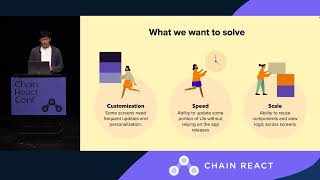
Mercado Pago moves navigation and layout decisions to the server so the backend returns backend-orchestrated deep links and large JSON payloads of JSON-driven sections that the app composes into screens; that enables rearranging flows, shipping new UI without app releases, and easy A/B tests. The server selects language and accessibility labels, and checks app version via user-agent to avoid unsupported links. Sections can be UIKit or SwiftUI so the product mixes mixed UIKit and SwiftUI sections while keeping strings and behavior controlled by the server with acceptable network performance.
AI-written summary · about
chapters (10)
- 0:00Introduction
- 1:03QR payment evolution
- 3:56Server-driven navigation
- 6:35Scaling and flexibility
- 8:33Handling localization
- 12:11Home screen revamp
- 14:54Section-based architecture
- 17:35Long-term maintenance
- 19:06UI kit and SwiftUI
- 20:52Q&A session
related talks
 29mServer Driven UI (BFF)
 09mServer-Driven UI
 35mLife is too short to develop only for Android – A journey to Server-driven UI
 24mUsing Server Driven UI to rapidly iterate on Android and Across Platforms
 34mServer Driven UIs: the future of cross-platform rendering
 32mLife is too short to develop only for Android – A journey to Server-driven UI
 33mScreens on Shuffle: How Netflix Scales Server‑Driven, Ever‑Changing Pages
 29mUsing server-driven UI to rapidly iterate across platforms