Building Reactive Views With the Architecture Components
summary
Claims that existing MVP login/onboarding code becomes reactive and lifecycle-safe by swapping presenter callbacks for a ViewModel that emits a sealed action/result stream. Uses Kotlin sealed classes for sealed action/result classes, RxJava operators like startWith and onErrorReturn to fold progress and errors into the stream, and Android Architecture Components ViewModel to remove attach/detach and retain state. Built this for Slack’s sign‑in flow, it reduces callback bloat, stays testable, and actually works in production.
AI-written summary · about
chapters (17)
- 0:00Intro
- 0:40Overview
- 1:22Onboarding
- 1:50Challenges
- 2:11Mockups
- 6:34Fear of alienating users
- 6:58Event classes
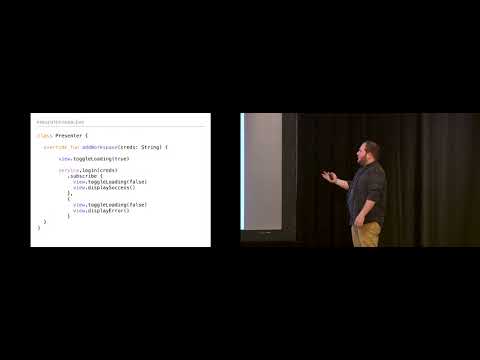
- 7:44Presenter classes
- 8:57Nested hierarchies
- 9:52Old MVP
- 12:28MVP Argument
- 13:18The Problem
- 14:42View Models
- 15:15Provider Factory
- 16:25ViewModel
- 17:24Testable
- 17:51Outro
related talks
 47mClean app design with Architecture Components
 30mArchitecting an app with MVP and ViewModels
 22mReactive, Clean Architecture and Android Architecture Components, a solid formula for a MVVM based a
 39mClean app design with Architecture Components
 35mcomponentization architecture with RxJava + Kotlin
 42mHands on MvRx: Building Real Apps
 35mShaping your app’s architecture with Kotlin and Architecture Components
 30mClean App Design with Architecture Components