Aging and Accessibility in Tech
summary
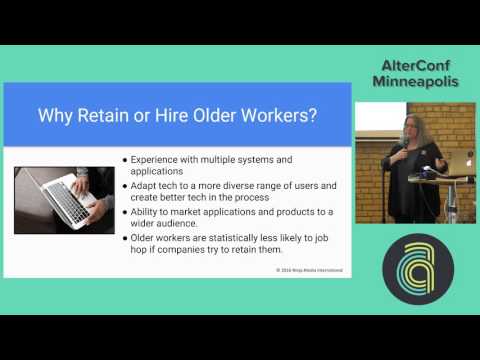
Argues that IT loses workers after about age 45 (BLS data) because cultural assumptions — “too expensive,” “resistant to change,” irrelevant skills — outweigh the real benefits of experience. Recommends concrete fixes: remote working and flexible hours, small physical changes like replacing fluorescent lighting, mentoring to capture tribal knowledge, and hiring changes such as anonymized resumes. Notes legal pressure for web accessibility, AARP interest in older consumers, and that low‑cost accommodations usually increase retention and product quality.
AI-written summary · about
chapters (16)
- 0:00Intro
- 0:13Valerie Lockhart
- 1:19Catherine Lundoff
- 1:45Accessibility in Tech
- 2:56Aging and Accessibility
- 3:30Common Impairments
- 4:40Aging NIT
- 5:24Barriers
- 8:23Accessibility considerations
- 11:28Creating a diverse workplace
- 13:36Resources
- 14:44Accessibility
- 15:14Employer resistance
- 15:43Demand solutions
- 16:44Being painfully persistent
- 17:18Age discrimination in tech
related talks
 18m“47 Years Old: They Still Haven't Noticed …”
 15mThe Value Of Old People In Technology
 49mAgeism in Interfaces
 55mAccessibility and Aging in Tech
 48mOlder Adults: Are We Really Designing for Our Future Selves?
 20mWhy we need to put accessibility first!
 20mAge and Interface: Equipping Older Adults With Technological Tools (Project Showcase)
 01h 00mI’m Old, Not Stupid: The Digital Divide and Keys to Inclusive Design