Introduction to Swift for Tensorflow
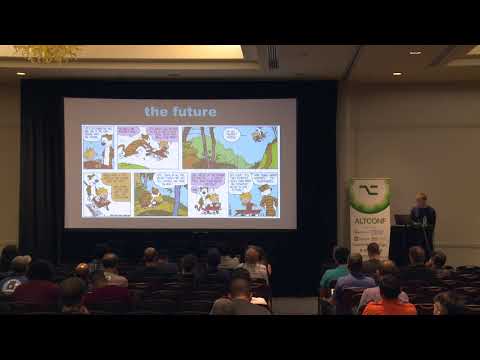
summary
Overview of a concrete workflow: Swift for TensorFlow compiles models through MLIR/XLA so one codebase can produce optimized runtimes for CPU, GPU, TPU and mobile devices, claiming write-once deploy-anywhere. Demos run in Google Colab and Jupyter notebooks (fast.ai ImageNet notebook runs on free GPUs), repositories include runnable examples and a two-command build to produce a Swift-for-TensorFlow toolchain. Notes GPU hardware has thousands of cores and much faster on-card memory, and Google pairs research models with nightly builds for practical testing.
AI-written summary · about
chapters (9)
- 0:00Introduction to Swift for TensorFlow
- 0:25Why combine Swift and TensorFlow
- 9:37Future of machine learning frameworks
- 12:49Cloud computing and AI trends
- 16:19Defining artificial intelligence
- 20:32Mobile development advantages
- 24:29Tools and skills for ML
- 26:16Getting started with Swift for TensorFlow
- 37:56Call to action and conclusion
related talks
 39mSwift for TensorFlow: Machine Learning with No Boundaries
 28mSwift for TensorFlow
 24mSwift for TensorFlow: machine learning with no boundaries.
 47mSwifty TensorFlow
 26mMachine Learning with TensorFlow
 27mMachine Learning and Mobile
 31mTensorflow for Janitors
 32mAI for Mobile and IoT Devices: TensorFlow Lite