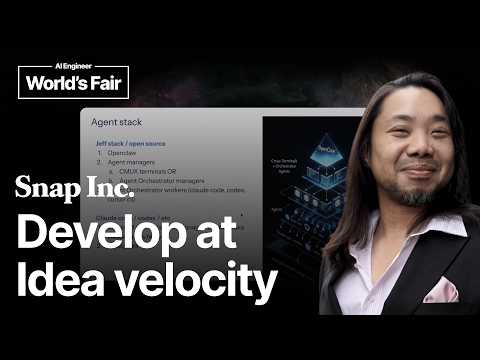
Develop at Idea Velocity
summary
Claim: the bottleneck is the harness not the model — after 1,000 hours of running fleets, agents pass on first runs then fail without persistent memory and guardrails. Concrete stack choices: Agent Orchestrator Managers + specialized workers, real-time terminal routing via CMUX, and Open Claw/tmux for worker orchestration and parallelization. Examples: an AI RPG and a multi‑model analysis site built and running; token‑burn tradeoffs measured across models; sandbox/staging workflow reduces flakiness.
AI-written summary · about
chapters (8)
- 0:00Workshop introduction
- 1:09OpenClaw overview
- 3:15Core concepts
- 4:05Code architecture
- 6:10Production lessons
- 7:40Application demos
- 9:15Infrastructure and tooling
- 12:20Troubleshooting and Q&A
related talks
 46mWhen You Run Out of Requirements: What Happens When You Go All-In on Agents
 32mWhat Agents Do When You’re Not Looking
 46mVibecoding your Own Multi-Agent Workstation
 19mNo Token Budget: Agentic Software Factories on Kubernetes
 46mHarness Engineering: How to Build Software When Humans Steer, Agents Execute
 24mAI Agents in Production: Why the Platform Matters
 14mHard Won Lessons from Building Effective AI Coding Agents
 24mAI Agent Swarms Are Amazing