Interview

summary
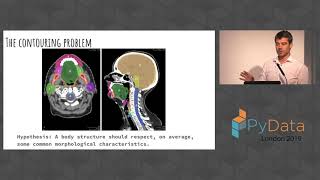
A cloud post-processing suite uses deep learning-based contouring to auto-segment cardiac MRI ventricles, trained on thousands of clinically annotated studies. The pipeline cuts a 30–60 minute manual contouring task down by an order of magnitude, produces consistent segmentations that reduce inter-operator variation, and still requires a radiologist to review results. Key risks are rare out-of-distribution patients that escape validation and clinician complacency, so workflow design and regulatory safeguards are central.
AI-written summary · about
chapters (5)
- 0:00AI definition debate
- 3:09Automating radiology tasks
- 6:21AI in medical workflows
- 8:07Patient safety concerns
- 9:54Conference insights
related talks
 18mCancer Screening using Deep Learning
 49mBuilding AI That Learns and Adapts: A Case Study in MRI Diagnostics
 43mBuilding AI That Learns and Adapts: A Case Study in MRI Diagnostics
 36mBeyond Medical Image Segmentation. The Road Towards Clinical Insights
 34mWhy AI in the Medical Field Both Sucks and Rocks...
 42mBuilding AI That Learns and Adapts: A Case Study in MRI Diagnostics
 47mThe whole truth about using deep learning in medical imaging
 40mFrom healthcare.hospital import datascience