Teaching Online in an Accessible and Effective Way
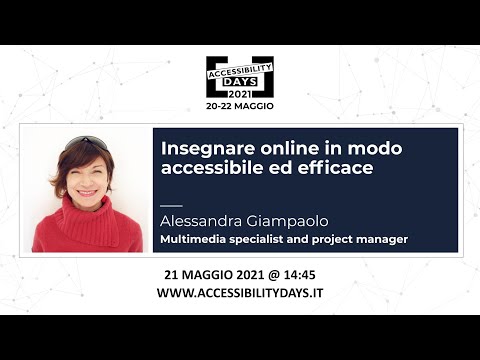
summary
The project redesigns online training by rebuilding content, workflows and platform components instead of adding a separate text-only version. It implements custom Moodle plugins and a new video player, enforces toggled captions and non-autoplay media, uses one core theme with different style sheets, and tests with a focus group of people with disabilities. The curriculum is 70% experiential, 20% social and 10% conventional, earned University of Bologna continuing-education accreditation for 2021–22, and produced measurable usability fixes from the focus-group testing.
AI-written summary · about
chapters (10)
- 0:00Introduction
- 2:15Teaching project experience
- 8:20Demo and goals
- 11:13Course macrostructure
- 17:35Accessible content design
- 21:47Technical solutions and player
- 27:26Team reflections
- 30:25Q&A
- 33:50Open source accessibility
- 39:14Conclusion
related talks
 36mExclusive Design
 53mAdapting Courses and Gamified Content for Blind and Low Vision Learners
 53mAccessible eLearning and More through Universal Design
 40mAccessibility, Eyes Closed
 33mHow to Teach Accessibility in a University Course
 48mAchieving Optimal Accessibility in Storyline and Other eLearning Environments
 01h 00mEmpowering Instructors: Mastering Accessibility for Inclusive Learning Experiences
 49mEstablishing a Scalable A11y Education Ecosystem