How Will LLMs Change Haskell, Programming and Open Source?
summary
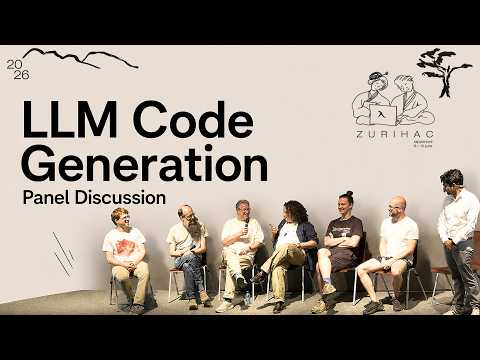
Panel covers concrete effects: hardware firms build inference chips, one user spends $7–8k/month on tokens and runs agents; LLMs speed simple tasks but produce residual bugs and repeatable hallucinations (one maintainer reports curl flooded with hundreds of AI bug reports, one-person burnout). Successful cases require specs or conformance tests (Cardano’s CEK implementations appear in hours from tests); past program synthesis (Z spec → C++) worked but specs rarely exist. Proposals include trust/effort tokens and selective bans (Zig) rather than blanket acceptance.
AI-written summary · about
chapters (13)
- 0:00Introduction And Panel Setup
- 2:06Panelist Introductions And Backgrounds
- 5:25Can Better Programming Languages Replace LLMs?
- 12:08AI-Generated Contributions In Open Source
- 20:42Audience Discussion On Productivity And Adoption
- 27:36Specifications, Formal Methods, And Program Synthesis
- 32:08Environmental And Ethical Concerns
- 37:13Education, Curiosity, And Developer Skills
- 45:42Smaller Models And Alternative Approaches
- 52:26Community Solutions And Trust Systems
- 58:51Economic Impact And The Future Of Work
- 1:07:36Open Source Models And AI Infrastructure
- 1:10:36Final Questions And Closing Remarks
related talks
 53mSemantics-based program manipulation in the age of LLMs
 43mFrom Lambda to LLMs: AI Coding and the Future of Programming
 42mOpen Source LLMs — Powering AI Accessibility and Innovation
 38mNobody Pages the LLM: Engineering Rigour for Vibe Coding
 44mJoint Keynote Address: Accelerating Software Development: The LLM (R)evolution
 32mWhat can we expect of LLMs as software engineers?
 39mLLMs everywhere: The future is now and the past keeps repeating itself
 45mLIVE 2023 Closing