Efficient Full-Stack Development with Java

summary
Compares three concrete Java full‑stack setups and shows working demos: Vaadin Flow (Java 21 + Spring Boot, Vaadin UI classes and web components, server‑side UI state, grid with lazy loading, Bean Validation binder, no REST client code — demo shows hello and master‑detail working over JSON "instructions"), Hilla (generated browser callables, TypeScript client, validation metadata generated), and Thymeleaf + HTMX (server‑rendered HTML fragments, stateless, SEO friendly). Build uses Maven/Gradle (hidden npm client build), persistence demo uses H2+JPA.
AI-written summary · about
chapters (7)
- 0:00Introduction
- 4:47Single page app challenges
- 6:17Full-stack Java frameworks
- 9:55Framework comparisons
- 15:05Vadin demo walkthrough
- 26:55Framework recommendations
- 27:38Conclusion and Q&A
related talks
 41mFull-Stack development is dead, long live Full-Stack development!
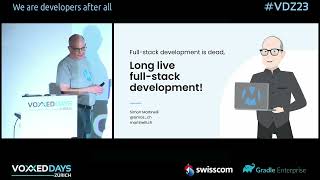 41mFull-stack development is dead, long live full-stack development!
 46mFull-stack Development is Dead, Long Live Full-stack Development!
 27m"Full-stack from the back: Building for the web with Java"
 44mFull-stack web apps, 100% Java
 42mReturn of the Full-Stack Developer
 44mJava developer-friendly frontends: Build UIs without the JavaScript hassle
 49mThree Different Methods to Build Web UIs in Java