Training without sharing: Is Federated Learning the answer to data privacy in AI?

summary
Compares centralized fine‑tuning to federated training using I2B2 datasets, a pretrained BERT (clinical variant) fine‑tuned for named‑entity recognition, and a federated averaging setup with equal‑sized clients simulated in Python/Jupyter. Measures are F1 and accuracy across many experiments and hyperparameter sweeps (clients per round, sentence length, batch size). Result: federated models reach virtually the same performance as centralized ones, sometimes outperforming on low‑data/rare labels, with communication rounds and client selection driving tradeoffs in cost versus convergence.
AI-written summary · about
chapters (13)
- 0:00Federated learning basics
- 3:13Healthcare AI data dilemma
- 8:08Why centralized training fails
- 10:37Federated learning privacy fix
- 16:21Federated vs centralized experiment
- 21:01NLP model for medical keywords
- 24:38Training centralized baseline
- 25:38Simulating federated learning
- 28:30Hyperparameter tuning for FL
- 30:14Federated vs centralized results
- 31:37FL implications for healthcare
- 33:24Future of federated AI
- 34:05Q&A
related talks
 42mLearning Together, Distributed: An Introduction to Federated Learning
 41mFederated Learning: Machine Learning on Decentralized Data
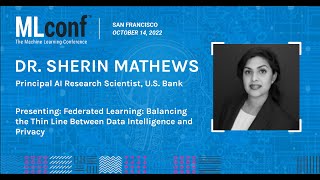 29mBalancing Thin Line Between Data Intelligence & Privacy
 34mDecentralized Machine Learning
 26mMachine Learning without the Data #federatedlearning
 45mManaged federated learning on AWS: A case study for healthcare
 31mFrom Theory to Practice: Advances in Real-World Federated Learning
 31mFederated Machine Learning with Kubernetes