How a Web Request Works, Down to the Atom

summary
Starts at the URL and follows DNS lookup to an IP, opens a three-way TCP handshake, sends an HTTP GET over port 80, and fragments the byte stream into sequences and packets with sequence IDs then frames down to the wire. Packet MTU is ~1500 byte MTU ≈ 1KB payload, examples show 16‑byte chunking and ACKs and a 4‑way close but typically keep‑alive persists connections. Ultimately voltage changes turn electrons → bits via voltage thresholds, and global scale claims: ~2 trillion GB next year and Internet carbon > airlines (2015).
AI-written summary · about
chapters (11)
- 0:00Intro
- 1:38Understanding how the Internet fundamentally works is important.
- 9:31Packets are sent between client and server to transfer data.
- 11:04This is the most common understanding of the network stack.
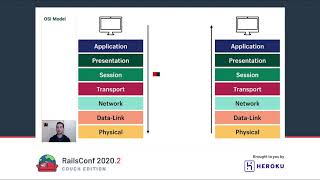
- 12:28The OSI model is often used to talk about networking in the abstract.
- 14:24The data in a web request is encoded as a stream of bytes.
- 15:59The TCP headers are added to handle the connection between two hosts.
- 17:29The MAC/LLC headers manage how packets navigate the local network.
- 19:36Electrically conductive atoms have a single electron in their outermost shell.
- 21:31In direct current electrons flow in one direction at a rate known as voltage.
- 22:42Numbers, text and other data can be translated into and out of bits