Can you trust your AI?

summary
Shows concrete risks and tooling: vision models mistake a referee’s bald head for a ball and resume-screeners favor men; text-to-image generators map “nurse” to women and “CEO” to men. Recommends monitoring and auditing with metrics (Prometheus/Grafana), snapshots for reproducibility, and local and global explainers such as LIME, SHAP and counterfactual explanations. Describes an open source TrustyAI Java library with Python bindings, a Cogito microservice runtime, and using explainability plus rule/decision tooling to reduce bias and support regulatory explanations.
AI-written summary · about
chapters (21)
- 0:00Intro
- 0:44Artificial Intelligence
- 6:52Problems with AI
- 9:05Right of explanation
- 15:33Different type of explanation
- 18:19Local explanation
- 20:42Knowledgeable explanation
- 21:55Minimize if possible
- 23:06Use a science method
- 24:20Fairness
- 25:31Trust AI
- 26:16Cogito
- 27:15Microservices
- 28:08Monitoring
- 30:03Library
- 30:48References
- 31:48QA
- 38:11Explainability
- 40:14Extracting explanations
- 41:48Is explainability important
- 43:06Theoretical work on explainability
related talks
 19mCan you trust your AI?
 39mThe Search for Transparency and Accountability in the Age of...
 30mTrustworthy AI - opening up the black box
 35mWhy Do You Need an Explainable Ai?
 11mKeynote: Trusted AI: Bringing Trust Back into AI through Open Source
 12mTrust and transparency of AI for the enterprise
- 39mSponsored Session: The Search for Transparency and Accountability in the Age of AI: RAI & XAI as Essential Tools
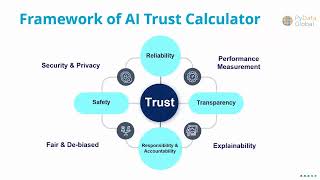 31mMeasurement of Trust in AI