Enabling Googley microservices with gRPC
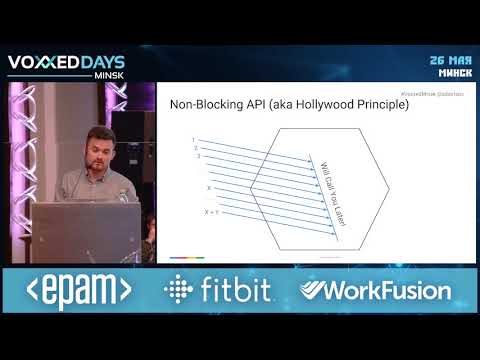
summary
gRPC (HTTP/2 + protobuf) claims concrete performance wins: migrating from JSON RPC shows 11× CPU improvement and community benchmarks report 200k–2M QPS depending on language and cores. It implements unary, server/client streaming and bidirectional streams, adds context cancellation propagation so downstream calls are cancelled automatically, and supports in-process transport for testing, pluggable load‑balancing and per‑stream flow control. The talk demonstrates these features with benchmarks, examples and failure‑mode behavior.
AI-written summary · about
chapters (27)
- 0:00Introduction to gRPC
- 1:19History and evolution of RPC
- 3:04Performance benefits of gRPC
- 6:38HTTP/2 and protocol advantages
- 8:07Defining services with Protocol Buffers
- 9:34Asynchronous processing with observers
- 12:03Building a gRPC server
- 14:59Client-server interaction demo
- 15:23API compatibility and evolution
- 16:46Synchronous vs asynchronous clients
- 18:41Bidirectional streaming
- 20:28Real-time updates with streaming
- 22:13Implementing bidirectional streaming
- 26:42Performance benchmarks and scalability
- 27:27Multi-language support
- 29:19Handling timeouts and failures
- 31:49Tuning timeouts for reliability
- 33:50Deadline propagation
- 37:05Request cancellation and propagation
- 38:30Flow control in bidirectional streaming
- 40:17Server-side flow control
- 42:26Challenges of microservices
- 43:07Service discovery and load balancing
- 44:30Testing distributed systems
- 45:32Additional tools and features
- 46:15Community and resources
- 46:58Conclusion and Q&A
related talks
 49mBuilding fast microservices with binary protocol - introduction to gRPC
 46mIntroduction to gRPC
 54mgRPC 101 for Spring Developers
 46mBuilding Microservices with Kotlin and gRPC
 01h 01mBuilding Microservice Communication with gRPC
 14mOverview of gRPC
 55mgRPC 101 for Java Developers
 39mKeynote: gRPC Opening Keynote - Abhishek Kumar, Google & Arunkumar Jayaraman, Google