All in client GraphQL

summary
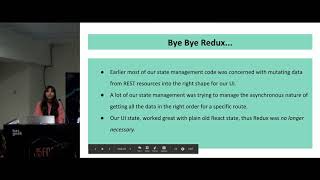
Implementation moves GraphQL into the browser as client-side GraphQL backed by an IndexedDB wrapper (Yandex IndexedDB) so queries, schemas and resolvers are reusable between front and back ends. Redux gets replaced — the local DB becomes the single source of truth and enables offline-first behavior with sync-by-timeout, occasional worker-based writes to avoid main-thread jank, and caching of dynamic queries. Caveats: first load still requires server, private-mode may block IndexedDB, and this suits apps with infrequent conflicts rather than real-time collaborative editing.
AI-written summary · about
chapters (8)
- 0:00Introduction to GraphQL
- 3:36When to use GraphQL
- 8:10How GraphQL works
- 16:26All-in client GraphQL
- 19:40GraphQL vs Redux
- 23:58Offline with IndexedDB
- 29:01Client-side GraphQL benefits
- 33:12Q&A
related talks
 29mWrite Queries, Not Code
 24mBuilding Reactive GraphQL Apps With Apollo
 23mA glimpse of GraphQL" Frontend developers’ life is easy now!"
 28mGraphQL without GraphQL - Backend Agnostic GraphQL inspired Queries For Colocating Data Requests With Components
 28mGraphQLifying React Native App
 01h 08mData sync for realtime or offline apps with React and GraphQL
 52mState management in a GraphQL era
 31mReimagining the frontend-backend divide thanks to GraphQL