The TileDB Universal Database

summary
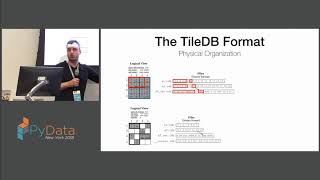
TileDB builds a storage engine around multi-dimensional arrays that unifies tables, images, point clouds and models into the same format; core is open-source C++ TileDB embedded and a serverless TileDB Cloud with integrations to Spark, Dask, Presto and MariaDB. Data is stored as cloud-optimized immutable fragments with tiled columnar files, sparse coordinates (COO), R-tree metadata and optional Hilbert ordering; writes are append-only with LSM-style consolidation and typical compression gains near 10x. Queries use arithmetic indexing on dense tiles and task-graph execution with SQL pushdown.
AI-written summary · about
chapters (23)
- 0:00Intro
- 1:48About TileDB
- 2:59Agenda
- 3:56Background
- 5:00Problem
- 6:47Cloud
- 9:09Machine Learning
- 12:13File Formats
- 16:37What are we suggesting
- 18:52Benefits
- 22:19Other Universal Databases
- 24:48Why no one is building it now
- 28:00What are arrays
- 30:32Why arrays
- 31:41Performance
- 32:39Arrays
- 35:26Sparse Arrays
- 40:13TileDB Format
- 42:09Space Style
- 47:21Tile Filters
- 48:04Indexing
- 49:57Features
- 56:59The Future
related talks
 37mThe TileDB Array Data Storage Manager
 47m10 Reasons Why the TiDB Database Should Power Your Next Development Project
 29mDistributed SQL How TiDB Modernized Data Management
 29mDistributed SQL: How TiDB Modernized Data Management
 13mUnlocking Your AI Potential With Real-Time Data Unification
 55mThe Future of MySQL
 42mMarija Selakovic
 25mBlobCity DB