A case study: Accessible Design for Learning Management Systems

summary
Cites studies suggesting 15–20% (some claim up to 40%) of New Zealanders show neurodivergent traits and applies that to LMS design: choose humanist typefaces with distinct character shapes, increase letter/word spacing and line-height, strip UI distractions (notifications, extra nav, progress frills), avoid unexpected motion that triggers vestibular symptoms, provide multiple display modes and simulated color overlays—turquoise and yellow show measurable reading gains—and documents a working resource called neurodiversity.design with practical component guidance.
AI-written summary · about
chapters (6)
- 0:00Introduction to neurodiversity
- 2:54Accessibility in Learning Management Systems
- 7:33Designing for ADHD learners
- 11:31Color and display considerations
- 15:00Universal benefits of inclusive design
- 16:25Introducing Neurodiversity Design System
related talks
 54mDesigning for Neurodiversity: The Dos, the Don’ts & the Definitely Nots
 01h 08mAccommodating Neurodivergent Learners
 51mBuilding A11y Digital Experiences for Neurodivergent Users
 01h 00mAccessible UX: Design for the rest of us
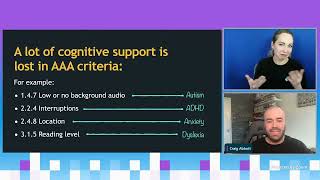 50mDesigning for neurodiversity
 40mBeyond Aesthetics: Designing with Color for Accessibility and Inclusion
 39mUX & Cognitive Accessibility
 46mAccessibility Through Visual Design