Why is Production ML so Hard?

summary
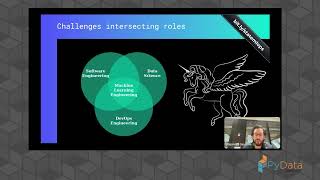
Claims that production ML fails because the model is only the small part of a larger system, and organizations trip over three concrete issues: organizational politics and ownership, scale and enterprise operational requirements and data/product‑market fit. Cites tooling gaps (Seldon, Common ML, TensorFlow 2.0 pipelines) and examples like aircraft damage image analysis where datasets are sparse and errors are lethal. Notes common realities: prototypes ignore security/compliance, teams lack deployable data, training costs (e.g., daily retrains) balloon, and attrition rises when work never ships.
AI-written summary · about
chapters (10)
- 0:00Introduction
- 1:07Why production ML matters
- 4:16ML code is just the tip
- 6:45Organization problems first
- 9:32No one owns the product
- 10:56Scale breaks prototypes
- 13:44Data product gap
- 17:54Right data right time
- 18:57Start small succeed big
- 20:20Collaboration over blame
related talks
 29mDemystifying Machine Learning in Production: Reasoning about a Large-Scale ML Platform
 47mMachine Learning in Production: An Intro to MLOps.
 01h 05mMachine Learning Models and Productionization
 52mThe ML Lifecycle in Combat Conditions
 30mThe State of Production Machine Learning in 2023
 25mML in Production–What does “Production” even mean?
 59mWhy Great Models Fail: Lessons From 9 Years of Deploying ML Models
 06mMachine learning is about your data and deployment