How Google Built a Consistent, Global Authorization System with Zanzibar

summary
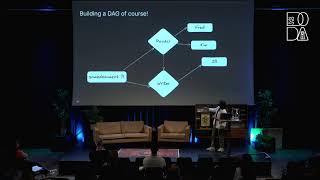
Describes Google’s Zanzibar: a global ReBAC system that runs across Docs, YouTube and Cloud IAM and hits 10 million queries per second (paper’s 2019 claim). Explains the relation-tuple schema, DAG checks broken into subproblems, hotspot avoidance that prevents ~500,000 internal RPCs/sec, and the zookie token for staleness control. Shows open-source implementations like SpiceDB, demos relation writes, permission checks and lookups, and reports these approaches work at production scale.
AI-written summary · about
chapters (18)
- 0:00Introduction and context
- 1:04Problem with authorization systems
- 3:52What is Google Zanzibar
- 4:35Relationship-based access control
- 6:23Relationship tuples explained
- 7:28Directed acyclic graph model
- 8:52Permission checks in Zanzibar
- 10:15Scaling with subproblems and caching
- 12:00New enemy problem and zuki tokens
- 14:09Handling hotspots and caching
- 15:57Impact and adoption of Zanzibar
- 17:24Open-source alternatives demo
- 21:37When to use Zanzibar-like systems
- 23:05Security and OWASP top 10
- 24:32Q&A: Dynamic attributes in access control
- 26:20Q&A: Small projects and Zanzibar
- 27:48Q&A: Reverse graph lookups
- 28:51Q&A: Optimizing graph traversals
related talks
 40mHow Google Built a Consistent, Global Authorization System with Zanzibar
 38mHow Google built a Consistent, Global Authorization System with Zanzibar
 21mZanzibar: Google’s Consistent, Global Authorization System
 44mSecuring RAG Pipelines with Fine Grained Authorization
 29mHow to Prevent AI Agents from Accessing Unauthorized Data
 39mSecuring RAG Pipelines with Fine Grained Authorization
 40mSecuring AI RAG Pipelines with Fine Grained Authorization
 16mAccess Granted with AuthZed