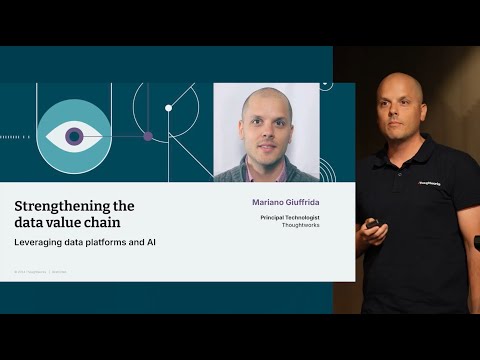
Strengthening the data value chain
summary
Claims that 90% of enterprise data is unstructured and that integrating data and AI means consolidating ways of working not merging stacks. Concrete tools cited include knowledge graph models, LLM‑based agents, data products, data platforms, data catalogs, Neo4j, Snowflake/AWS clean‑room offerings, and FinOps for ROI. A pharma case uses a semantic knowledge graph plus LLM agents and productized data to speed oncology research and cut costs. Recommended actions: track impact end‑to‑end, adopt data mesh for decentralized ownership, automate governance, and treat unstructured data as a core asset.
AI-written summary · about
chapters (10)
- 0:00Data value chain intro
- 1:07Data and AI adoption shifts
- 3:36Integrated data and AI platforms
- 4:42FinOps for data ROI
- 5:48Data catalogs and knowledge graphs
- 6:32Talking to data democratization
- 7:16Monetizing data marketplaces
- 8:21Pharma research case study
- 9:29Actionable data strategy insights
- 10:58Closing organizational evolution
related talks
 30mMastering Unstructured Data with AI and ML
 01h 00mData Mesh: Beyond the Data Lake
 27mEmpowering Generative AI with Unified Data Integration: A Logical Approach.
 43mFostering a Data-Driven Culture
 45mInnovating with Data
 08mLeveraging data insights to increase efficiency and innovation
 41mGetting Your Data AI-Ready
 02mHow to Manage the Changing Data Landscape