Introduction to Software Defined Radios
summary
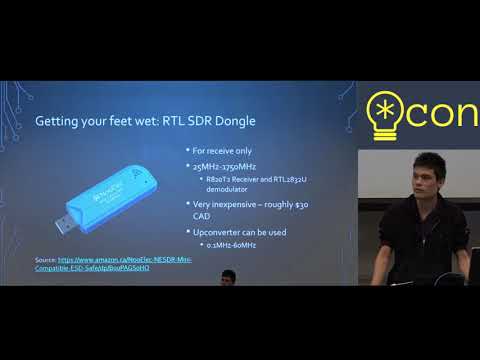
A practical primer: get an RTL‑SDR (~$30, 25–1750 MHz, receive‑only), use a waterfall/spectrum analyzer to find signals, buy an antenna or upconverter for lower bands, and decode concrete systems — ADS‑B tracking at 1090 MHz works reliably, NOAA weather satellites at 137 MHz decode with a proper antenna, garage‑door remotes can often be recorded and replayed, and reverse engineering requires discovering the frequency, modulation (ASK/FSK/PSK) and protocol. Amateur license needs 80/100 on the standard exam; Unitrunker is Windows‑only.
AI-written summary · about
chapters (11)
- 0:00Intro
- 1:23What is SDR?
- 3:1018 Getting your feet wet: RTL SDR Dongle
- 4:26What can you do with an RTL SDR?
- 5:23General Purpose Receiver Software
- 6:15Listen to Emergency Response Radio
- 7:25Amateur Radio Operator
- 8:08Reverse Engineering Digital Signals
- 8:39Finding Frequency
- 10:00Modulation Diagrams
- 11:03Protocol - Replay Attacks
related talks
 45m Hacking satellites with Software Defined Radio (SDR)
 53mHacking the Wireless World with Software Defined Radio - 2.0
 01h 02mHacking the Wireless World with Software Defined Radio - 2.0
 01h 00mHacking the Wireless World with Software Defined Radio - 2.0
 59mWireless security testing with attack
 39mHack the Sky: Exploring Satellite Vulnerabilities and Cyber Threats
 51mSDRs for Real, or How to Catch a Drone?
 51mRadio Hacking: Cars, Hardware, and more!