Selenoid: Ditch Selenium Server! Part 2
summary
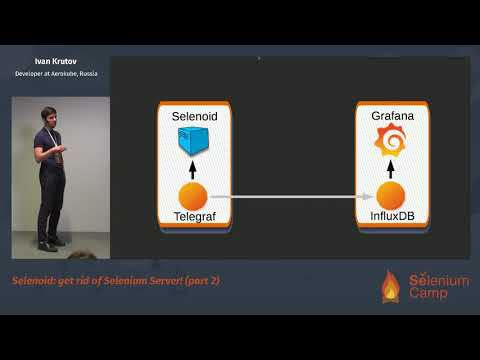
Selenoid is presented as an efficient open-source replacement for the standard Selenium Server to build scalable browser automation clusters. The talk explains how Selenoid achieves higher performance and demonstrates features such as video recording of tests, centralized logging and statistics collection, and ways to visualize that data.
AI-written summary · about
chapters (27)
- 0:00Introduction
- 1:20Selenide Status API demo
- 3:05Grafana metrics
- 5:13Metrics setup
- 7:41Grafana InfluxDB Docker
- 10:18Import Grafana dashboard
- 11:46Telegraf metrics
- 13:38Run tests watch metrics
- 18:01Centralized logs
- 18:23ELK Stack overview
- 20:10ELK Stack VM setup
- 20:54ELK Stack config
- 23:25Run Elasticsearch Logstash Kibana
- 25:22Filebeat log collection
- 28:18Filebeat on Selenide
- 29:43Run tests send logs to ELK
- 30:05View logs in Kibana
- 31:34Summary Q&A
- 32:17Telegraf questions
- 34:26Why logs and metrics
- 35:51Grafana dashboards
- 36:39Test statistics
- 37:46Parallel Selenide containers
- 38:52Selenoid Router purpose
- 39:55Support and communication
- 40:39Browser logging questions
- 41:21Conclusion Q&A
related talks
 43mSelenoid: running Selenium tests in Docker containers
 47mSelenide101 – Getting up and running with real web tests (Alexei Vinogradov, Germany), part 2
 44mReliable. Scalable. fast. Running 1000000 Android tests with Selenoid
 44mAndrei Solntsev: Selenide: Easy Automated Rests for Mobile & Web in Java
 43mSelenide for Pros
 39mSelenide: Make Java UI Tests Great Again!
 31mScalable Selenium Cluster: Up & Running
 37mSelenium In the Enterprise: What went right, what went wrong (so far)