The Selenium Infrastructure

summary
Salesforce runs ~13 million test executions per day including ~1 million Selenium runs; 75,000 distinct Selenium tests across 52 auto-builds, up to 70 parallel sub‑runs, and a static pool of ~1,200 VMs at ~50% utilization drove cost and flakiness. The team builds a Salesforce Dynamic Grid using Selenium, JClouds, EC2/OpenStack and Perforce-triggered autotests that provisions identical testbeds on demand, auto-reruns and files bugs for flappers, and shifts capacity across clouds to improve utilization, determinism and burst scalability.
AI-written summary · about
chapters (12)
- 0:00Intro
- 1:45Automation Infrastructure: Mission
- 2:3613.6M Test Executions every day on a shared infrastructure
- 4:48An Autotest is distributed
- 6:08Code Changes Triggering Thousands of Selenium Test Execution
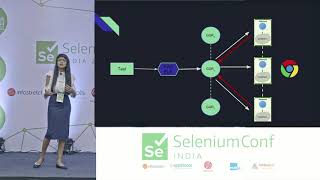
- 8:43The Selenium Infrastructure
- 15:20Our Old Static Infrastructure
- 17:37Static Grid has tons of issues
- 21:31Utilization with Static VMs
- 24:56Why NOT Selenium Grid?
- 30:27Salesforce's Dynamic Grid
- 37:47Selenium worked for us, and now you can too
related talks
 09mTest Time Execution! Why it Can't be Ignored?
 38m1 Million Executions Per Month
 34mGood, Cheap, and Fast, Scaling Your Selenium Grid in the Cloud
 29mScaling Spinnaker for multi-region multi-cloud SaaS deployments
 53mTransforming testing methodologies: From manual to robust strategies
 26mOn-demand Test Infrastructure on ECS as code
 32mA Peek Inside the Enterprise Cloud at Salesforce
 28mSalesforce Status Report – What Are We Up To With Spinnaker?