JupyterLite, Emscripten-forge, Xeus, and Mamba

summary
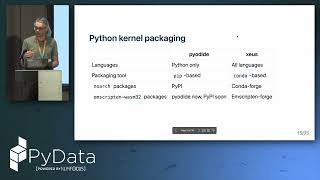
JupyterLite runs entirely in the browser using WebAssembly kernels so deployments serve only static files and scale to millions via static files; Xeus provides C++ kernel scaffolding while pyodide and Xeus-Mamba approaches determine package provenance. Emscripten-forge supplies conda/mamba packages targeting wasm32 so custom environments can be built and included. The demo builds a site, boots kernels in seconds, and shows an experimental in-browser terminal that runs small executables (Lua works) though full Python package runtime resolution is still in progress.
AI-written summary · about
chapters (14)
- 0:00Introduction
- 1:10What JupyterLite is
- 3:20WebAssembly and Python
- 5:10Voila demo
- 6:19JupyterLite strengths
- 7:24JupyterLite progress
- 8:48Terminal demo
- 12:08Kernels and Xeus
- 15:44Pyodide vs Xeus kernels
- 17:07Packaging challenges
- 19:16Emscripten-forge and WASM32
- 21:46Deploying JupyterLite
- 24:14Summary and plans
- 25:16Q&A
related talks
 29mExpanding Programming Language Support in JupyterLite
 39mJupyterLite: run all your code in a web browser using WebAssembly
 35mJupyterLite: Jupyter ❤️ WebAssembly ❤️ Python
 34mPanel Discussion: Browsers & Wasm
 41mPyodide: A Python distribution for the browser
 53mWebAssembly
 45mEmscripten
 45mThe marvelous world of Python in Browser: a nice surprise